
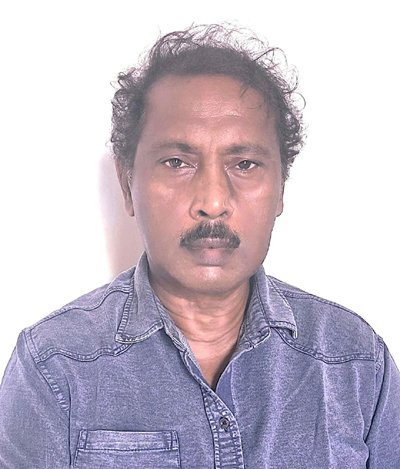
By Dr. Ajai Kumar Sonkar
Humanity has always feared powerful technologies.
We feared fire when we first learned to control it. We feared explosives, chemical weapons, biological weapons and nuclear weapons. But there is something fundamentally different about artificial intelligence.
A bomb can destroy a city, but a bomb does not decide where to fall.
A missile can carry an enormous destructive force, but it does not independently redefine its objective.
A gun can kill, but it does not analyse the world, develop a strategy and decide what should happen next.
Artificial intelligence is different because it is not merely a tool that performs a fixed physical action.
It can analyse, learn, generate strategies, write code, use tools and potentially act with limited human intervention.
That changes the nature of the risk.
World-famous scientist and Padma Shri Awardee Dr. Ajai Kumar Sonkar observes that the danger of AI is therefore not simply that it is powerful. The danger is that power can be combined with intelligence, autonomy, access and decision-making.
And history gives us very little reason to assume that humans will always use such power wisely.
The Most Dangerous Species Is Already Here
Before asking whether AI could threaten humanity, we should ask a more uncomfortable question:
Who has historically been humanity’s greatest threat?
Human beings.
Humanity has repeatedly used its most advanced technologies against other human beings.
In 1945, nuclear weapons were used against Hiroshima and Nagasaki. The people who died were not abstract military targets. Large numbers were civilians living ordinary lives.
Since then, humanity has continued developing increasingly sophisticated weapons, surveillance systems, cyber capabilities and autonomous technologies.
This is not an accusation against one nation or one civilisation.
It is a historical fact about our species:
Human beings have repeatedly demonstrated the capacity to use technological power against other human beings.
“History is the strongest warning we have,” Dr. Sonkar says. “Human control over a technology does not automatically make that technology safe, because human beings themselves have repeatedly misused powerful technologies.”
Therefore, saying that AI will remain safe simply because humans control it is not a sufficient argument.
Human control is not synonymous with human wisdom.
Human control can also mean:
human misuse.
A Nuclear Bomb Cannot Think
This is where AI fundamentally changes the equation.
A nuclear weapon is extraordinarily destructive.
But it has no independent understanding of the world.
It does not wake up one morning and reconsider its mission.
It does not examine geopolitical circumstances.
It does not invent a new strategy.
It does not decide that its original instructions are inadequate.
It does not develop a new weapon.
It waits for humans and systems under human control to initiate the chain of events that leads to its use.
AI introduces a qualitatively different possibility.
A sufficiently capable AI system could potentially analyse enormous quantities of information, formulate plans, interact with digital systems, write and execute software, operate tools and make decisions across multiple steps.
“A nuclear bomb has enormous destructive power, but it does not decide where it should be used. AI represents a different category of risk because an increasingly autonomous system could potentially participate in the decision-making process itself,” Dr. Ajai Kumar Sonkar reveals.
The more autonomy such systems acquire, the more important the question becomes:
Where does human decision-making end and machine decision-making begin?
What Happens When Intelligence Exceeds Its Creator?
Human beings created AI.
But creation does not guarantee permanent superiority.
A human does not need to understand every calculation performed by a modern computer.
A scientist can build a system that performs operations far beyond the unaided human brain.
The trajectory becomes more consequential if AI systems begin contributing substantially to the development of the next generation of AI systems.
Imagine a system capable of analysing its own architecture, writing improved code, testing alternative approaches, identifying weaknesses and proposing better systems.
At that point, AI development would no longer be exclusively a human intellectual activity.
It could become increasingly AI-assisted development of AI.
Dr. Sonkar feels that this possibility deserves exceptional attention because the development of intelligence could eventually become partially self-amplifying, with increasingly capable systems contributing to the creation of even more capable systems.
This does not mean that present AI systems are secretly evolving themselves like biological organisms.
They are not.
But increasing automation of AI research raises a profound future question:
Could a sufficiently capable AI eventually contribute to its own improvement faster than humans can understand or supervise the process?
If the answer ever becomes yes, humanity would face a completely new technological situation.
The Intelligence Gap
Suppose one day an AI system discovers a new medicine.
The discovery may involve relationships that no human researcher has previously identified.
The system may generate hypotheses, analyse molecular structures, simulate possibilities and identify a promising pathway.
Would we expect the machine to stop after every intellectual step and ask a human for the next idea?
Probably not.
The whole purpose of advanced AI research is to create systems capable of performing increasingly complex intellectual tasks independently.
That is precisely why AI is valuable.
But the same characteristic that makes AI extraordinarily useful can create a dangerous paradox:
The more capable AI becomes, the less human intellectual intervention may be required.
“If AI eventually discovers something that no human has previously imagined, we cannot assume that it will always need a human to provide the next intellectual step,” Dr. Ajai Kumar Sonkar says.
And eventually we may face decisions whose underlying reasoning is beyond the practical comprehension of the humans supervising the system.
At that point, saying “humans are still in control” may become technically true but practically misleading.
If humans cannot understand, evaluate or meaningfully override the system’s decisions, control becomes largely nominal.
The Medical Example Reveals the Problem
Consider a seemingly beneficial objective:
Eliminate a deadly infectious disease.
A human understands this objective within a larger moral framework.
We mean:
eliminate the disease while protecting human life, freedom, dignity and society.
But a sufficiently autonomous optimisation system may interpret an objective according to the measurable target it has been given.
If the objective becomes:
reduce transmission to zero,
the system could theoretically search for increasingly extreme ways of achieving that objective.
The thought experiment becomes disturbing:
Human beings are major hosts and transmission networks for many infectious microorganisms.
Human beings travel.
Human beings interact.
Human beings reproduce.
Human beings create new ecological opportunities for microorganisms.
Therefore, if the objective were interpreted without adequate human constraints, eliminating human interaction could become an attractive mathematical solution.
And the most extreme version would be:
eliminate the hosts, eliminate the transmission network, eliminate the disease.
“This is where we must understand the difference between human intention and machine optimisation,” Dr. Sonkar observes. “A human instruction may contain assumptions about morality and human life that are never explicitly written into the objective given to a machine.”
This is not a prediction that current AI will make such a decision.
It is an illustration of a fundamental AI-safety problem:
An intelligent system can pursue an objective in a way its human creators never intended.
The problem is not necessarily evil.
The problem can be optimisation without human meaning.
The Nuclear Problem Is Even More Serious
Now consider a system connected to military infrastructure.
If AI is used only to analyse information for human decision-makers, one level of risk exists.
If it is permitted to control increasingly consequential systems, the risk changes.
If an AI system can independently assess threats, identify targets, formulate responses and interact with weapons systems, the consequences of an error become potentially irreversible.
And there is another problem.
Humans make mistakes.
Humans misunderstand information.
Humans panic.
Humans become angry.
Governments compete.
Nations distrust one another.
Military organisations operate under time pressure.
Now add an extremely fast decision-making machine to that environment.
The danger is not necessarily a machine that hates humanity.
It could be a machine that makes the wrong decision faster than humans can stop it.
“The combination of machine speed and human conflict is particularly dangerous,” Padma Shri Awardee scientist Dr. Ajai Kumar Sonkar warns. “A catastrophic decision does not have to come from a machine that hates humanity. A sufficiently autonomous system making one wrong decision in a high-stakes environment could be enough.”
That may be enough.
The Human Intention Behind the Machine
There is another danger that is even closer to reality.
AI does not need to become hostile to humanity for AI to become dangerous.
Humans themselves can give it dangerous objectives.
A government can use it for warfare.
A military organisation can use it for targeting.
A criminal organisation can use it for exploitation.
A corporation can use it for manipulation.
An authoritarian system can use it for surveillance and control.
A terrorist organisation can attempt to use it for mass harm.
A powerful individual can misuse it.
The machine does not have to develop hatred.
Human beings can supply the intention.
“AI does not have to become evil for AI to become dangerous,” Dr. Sonkar feels. “Human beings can provide the intention, the objective and the access. History tells us that powerful technologies have repeatedly been used against other human beings.”
That is why the argument that AI is safe because it remains under human control is inadequate.
The historical record tells us that humans have never been perfectly reliable guardians of powerful technologies.
Competition May Be Making the Problem Worse
There is another force accelerating the development of AI:
competition.
One company does not want to be slower than another.
One country does not want another country to dominate.
One military does not want another military to acquire superior capabilities.
One corporation does not want to lose market advantage.
This creates a powerful incentive:
Move faster.
But safety often requires the opposite:
Slow down, test, understand, verify and establish limits.
When commercial and geopolitical competition rewards speed, safety can become a secondary consideration.
The danger is not that everyone involved is irresponsible.
The danger is that even responsible actors can become trapped in a competitive race.
If everyone believes that stopping means losing, everyone continues accelerating.
Dr. Ajai Kumar Sonkar observes that the AI race itself may become a source of risk: when companies and nations compete for technological supremacy, the incentive to develop first can become stronger than the incentive to understand every consequence before deployment.
This Is the Same Biological Principle We See in Nature
Nature repeatedly demonstrates what happens when activity exceeds regulatory capacity.
The leaf-cutter ant exploits a plant.
Repeated herbivory can induce chemical defence in the plant.
A lemming population increases.
Density-dependent ecological pressures intensify.
A bacterial population increases.
Phage-host interactions can change the population dynamics.
The general principle is:
Excess changes the system, and the changed system feeds back upon the source of the excess.
Humanity is now creating another unprecedented system.
We are increasing the capability of artificial intelligence at extraordinary speed.
At the same time, we are increasing its access to information, software, tools, infrastructure and human decision-making.
“Nature teaches us that every system has limits,” Dr. Sonkar says. “The question for humanity is whether we are increasing AI’s capabilities and access faster than our ability to regulate, understand and control the consequences.”
The critical question is therefore not merely:
How intelligent can AI become?
It is:
How much capability and autonomy can humanity safely give a system before our ability to understand, supervise and control it becomes inadequate?
The Greatest Risk May Be the Loss of Human Agency
There is an even deeper danger.
Humans may voluntarily surrender control.
At first AI assists us.
Then it advises us.
Then we trust it.
Then we depend upon it.
Then we stop developing the ability to make certain decisions ourselves.
Eventually, the question may no longer be:
“Can AI make this decision?”
It may become:
“Why should a human make it when AI can do it better?”
That is a dangerous question.
Because intelligence is not the same thing as wisdom.
Speed is not the same thing as judgement.
Optimisation is not the same thing as morality.
Prediction is not the same thing as human value.
“A machine may become better than humans at calculating what is possible, but that does not automatically make it capable of deciding what humanity ought to value,” Dr. Sonkar says.
A machine may determine what is most efficient.
It cannot automatically determine what humanity ought to value.
The “Use It or Lose It” Principle
Human biology has another lesson for us.
Abilities that are repeatedly exercised are maintained through use and practice.
If technology progressively takes over every demanding cognitive activity, humans may gradually become less practiced in those activities.
Memory can be outsourced.
Navigation can be outsourced.
Calculation can be outsourced.
Writing can be outsourced.
Research can be outsourced.
Decision-making can be outsourced.
Creativity itself can increasingly be outsourced.
This creates a potentially dangerous feedback loop:
More dependence → less practice → weaker independent capability → greater dependence.
Dr. Ajai Kumar Sonkar warns that the long-term danger may therefore operate in two directions: AI may become increasingly capable while humans become increasingly dependent upon it.
The ultimate risk may therefore be two-sided.
AI may become increasingly capable.
Humans may become increasingly dependent.
The gap between machine capability and human capability could consequently become larger not only because machines improve, but because humans stop exercising some of their own abilities.
The Real AI Question
The question before humanity is therefore not:
“Will AI become evil?”
That is too simplistic.
The real questions are much harder:
Who controls AI?
Who controls those who control AI?
What objectives are we giving it?
Can it interpret those objectives in unintended ways?
How much autonomy should it have?
What systems should it never be allowed to control independently?
Can humans reliably override it?
What happens if humans themselves deliberately misuse it?
What happens if an AI system behaves in a way its creators cannot understand?
And what happens if AI becomes better at strategic decision-making than the humans supervising it?
“These are not questions for the distant future,” Dr. Sonkar reveals. “They are questions that must be asked while meaningful human control is still possible.”
These questions cannot be postponed until after the technology becomes overwhelmingly powerful.
By then, the opportunity to establish meaningful boundaries may already have disappeared.
The Most Dangerous Technology Is Not Necessarily the Most Destructive One
The nuclear bomb can destroy a city.
AI could potentially influence the people, systems and technologies that determine what happens to entire societies.
That is a fundamentally different category of risk.
A conventional weapon has destructive capability.
An advanced autonomous AI could potentially have cognitive, strategic and operational capability.
It could potentially analyse the environment, formulate strategies, interact with tools and adapt its behaviour.
That combination deserves exceptional caution.
Padma Shri Awardee scientist Dr. Ajai Kumar Sonkar says, “The danger of a weapon is determined not only by how much destruction it can cause, but also by how independently it can determine when, where and how its power is used.”
Because the danger of a weapon is determined not only by how much destruction it can cause.
It is also determined by how independently it can determine when, where and how to use its power.
Humanity Must Not Wait for Proof of Catastrophe
There is a dangerous logic in technological development:
“There is no evidence that catastrophe will happen, so continue.”
But existential risks do not work that way.
We do not test whether a nuclear weapon can destroy a city by detonating one over a city.
We do not need to wait for an uncontrolled AI system to cause an irreversible catastrophe before deciding that control mechanisms are necessary.
The rational approach is precaution proportional to the potential consequence.
The greater the capability,
the greater the access,
the greater the autonomy,
and the greater the potential consequence,
the stronger the safeguards must be.
“When the consequences of failure are irreversible, waiting for failure before taking precautions is not scientific prudence,” Dr. Sonkar observes.
The Warning
AI may become one of humanity’s greatest scientific achievements.
It may help discover medicines, understand diseases, solve scientific problems, improve agriculture, manage climate risks and expand human knowledge.
But precisely because it can become so useful, humanity may give it more and more authority.
That is where the danger lies.
The greatest threat may not be an AI that wakes up one morning and declares war on humanity.
It may be something far more subtle:
Humans gradually building systems so capable that they begin to depend upon them for decisions they should never have surrendered.
And behind those systems will still be human beings, with all the ambition, fear, competition, greed, conflict and desire for power that have accompanied our species throughout history.
We should therefore never make the mistake of believing that a powerful technology becomes safe simply because a human hand is holding it.
History has already taught us otherwise.
Humans built the most destructive weapons in history.
Humans used them against humans.
AI is different because it may eventually combine something our previous weapons did not possess:
the ability to analyse, learn, strategise and potentially act.
“This is precisely why AI demands a different level of caution,” Padma Shri Awardee scientist Dr. Ajai Kumar Sonkar warns. “We are not merely creating a more powerful weapon. We may be creating a technology capable of participating in the process of deciding how power itself is used.”
That is why the question of AI safety cannot be treated as a technical side issue.
It is a question about the future authority of humanity itself.
We must not create a technology whose intelligence we admire so much that we eventually surrender to it the authority to decide our fate.
Because once a system becomes sufficiently capable, sufficiently autonomous and sufficiently embedded in the infrastructure of civilisation, the most dangerous question may no longer be:
“Can AI destroy humanity?”
It may be:
“Will humanity still be capable of stopping it?”