
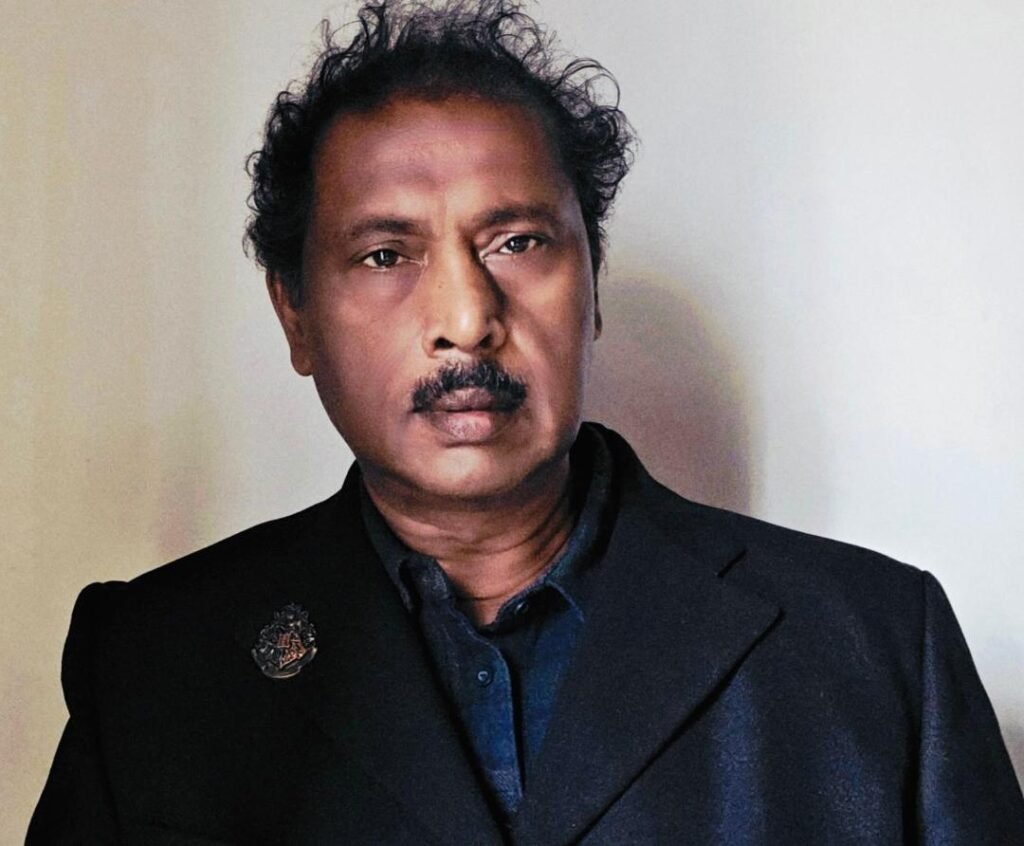
Sri Vijaya Puram, Oct. 4: Padma Shri Awardee in Science & Engineering Dr. Ajai Kumar Sonkar has been invited by the Embassy of Nepal, New Delhi, to participate as a Distinguished Speaker in the three-day educational, scientific and humanitarian programme “Always Remember – We Are Together!”, to be held from 18 to 20 February 2027 at the Everest Science Center Nepal (ESCN), Sunsari, Nepal.
The invitation is particularly significant as the programme brings together scientific perspectives, environmental awareness and humanitarian education for young students affected by the recent floods in Nepal. According to the Embassy, approximately 200 students directly affected by the floods, including children who have lost parents or loved ones, will be supported through the programme, while the wider science-awareness activities are expected to reach more than 5,000 students from Sunsari, Jhapa, Morang, Dhankuta, Siraha and neighbouring districts.
The programme will also feature a presentation by a NASA scientist on global warming and climate change, bringing together international scientific perspectives on some of the most important environmental challenges facing humanity.
The central focus of Dr. Sonkar’s interaction with the students and participants will be to develop a deeper understanding of nature’s ecology and the intricate relationship between human health, environment and natural biological systems.
Drawing from his work on microbial intelligence, ecology, cell biology and environmental science, Dr. Sonkar intends to explain how nature has evolved complex biological systems that maintain balance, resilience and life, and why human development must learn to work with these systems rather than continuously replace them with artificial environments.
His message will particularly explore how the modern human approach to development has increasingly separated people from natural ecological processes. Excessive dependence on artificial environments, synthetic chemicals, highly sanitised surroundings and technologically mediated lifestyles can create what Dr. Sonkar describes as an “artificial epigenetic environment”, capable of influencing human biology while simultaneously placing pressure on natural ecosystems.
The scientific discussion will therefore encourage students to think beyond the conventional idea that development simply means more technology, more control and greater artificialisation of life. Instead, it will emphasise the need to understand nature, respect ecological limits and move towards development that is more closely aligned with natural biological processes.
Dr. Sonkar said, “I consider this invitation from the Embassy of Nepal a matter of immense personal honour and a moment of pride for India. To be invited as a Distinguished Speaker alongside an international scientific voice from NASA gives me an opportunity to share an important message about our relationship with nature.
Nature is not merely something outside us that we need to protect. Nature is also within us. Our health, microbiome and biological resilience have evolved through continuous interaction with the natural environment.
Modern development has given humanity extraordinary technological capabilities, but we have increasingly moved towards artificial environments and away from natural ecological systems. We therefore need to ask not only what we can invent, but whether what we invent is compatible with life.
Returning to nature does not mean rejecting science or technology. It means using science to understand nature more deeply and using technology with greater ecological wisdom. The future should be science that learns from nature.”
The Embassy has acknowledged Dr. Sonkar’s contributions to education, science, innovation and social development, and expressed that his interaction with students would be a source of encouragement and inspiration.
For Dr. Sonkar, the invitation is therefore more than an international speaking engagement. It provides an opportunity to place ecological understanding, human health and responsible development at the centre of scientific education, particularly for a generation that will inherit the environmental consequences of today’s decisions.
His participation alongside an international scientific voice from NASA also gives the programme an important scientific dimension, connecting global concerns such as climate change with a deeper question: how can humanity develop without losing its biological and ecological connection with nature?
The programme thus represents a meaningful convergence of science, environmental responsibility, humanitarian values and India-Nepal friendship, with young students at its centre.