
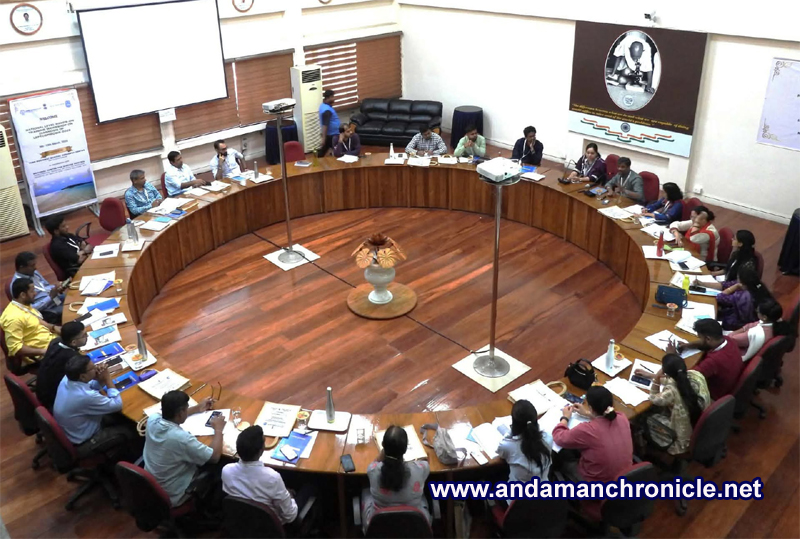
Sri Vijaya Puram, March: The five-day National Level Hands-on Training Workshop on Diagnosis of Leptospirosis concluded today at the ICMR–Regional Medical Research Centre (ICMR–RMRC), Sri Vijaya Puram, after successfully training scientists, professors, laboratory professionals, and public health experts across India.
The ICMR–Regional Medical Research Centre, Sri Vijaya Puram, which serves as a WHO Collaborating Centre and Reference Laboratory for Leptospirosis, has been playing a pivotal role in research, surveillance, and diagnostic support for leptospirosis across the South-East Asia region for more than two decades.
The workshop, conducted from March 9 to March 13, 2026, brought together participants from several states and Union Territories, including Andhra Pradesh, Kerala, Odisha, Maharashtra, Dadra and Nagar Haveli, Gujarat, Madhya Pradesh, Tamil Nadu, Tripura, Uttarakhand, Telangana, Uttar Pradesh, West Bengal, Sikkim, Andaman and Nicobar Islands, and New Delhi. Representatives from the National Centre for Disease Control also participated in the programme.
The training programme aimed to strengthen laboratory capacity and enhance diagnostic capabilities for leptospirosis, a significant zoonotic disease of public health importance in India. The workshop included expert lectures, practical demonstrations, and hands-on laboratory sessions focusing on standardized diagnostic techniques, molecular methods, serological testing, culture techniques, and laboratory quality assurance practices.
The inaugural session was graced by distinguished dignitaries from national public health institutions. Dr. Naveen Kumar Gupta, Director of the BCG Vaccine Laboratory, attended the programme as the Chief Guest, while Dr. Aarti Tiwari, Joint Director and Officer-in-Charge (CAZD) at the National Centre for Disease Control, attended as the Guest of Honour. Both dignitaries highlighted the importance of strengthening diagnostic infrastructure and surveillance systems for zoonotic diseases in India.
The workshop was organized under the guidance of Dr. Aparup Das, Director of ICMR–RMRC, Sri Vijaya Puram, whose leadership has been instrumental in promoting research, surveillance, and capacity-building activities in the region.
The programme was coordinated by Dr. Muruganandam Nagarajan, Scientist-E at ICMR–RMRC, Sri Vijaya Puram, and Regional Coordinator for the National One Health Programme for Prevention and Control of Zoonotic Diseases (NOHP-PCZ) for Tamil Nadu, Puducherry, and Andaman & Nicobar Islands, and other scientists and team.
Throughout the five-day workshop, several eminent experts and resource persons from leading institutions shared their knowledge and experience with the participants through lectures, discussions, and hands-on training sessions, providing valuable insights into laboratory diagnosis, surveillance strategies, outbreak preparedness, and the One Health approach for effective control of leptospirosis.
Overall the sessions were designed to familiarise participants with advanced and standardized diagnostic techniques and preventive strategies for leptospirosis, enabling them to implement these approaches effectively in their respective laboratories and public health systems.
Through this national training initiative, the ICMR–Regional Medical Research Centre, Sri Vijaya Puram aims to develop a strong network of trained professionals and laboratories across India, thereby strengthening national disease surveillance, improving early diagnosis, and enhancing the country’s capacity to respond to leptospirosis outbreaks and other emerging zoonotic diseases.