
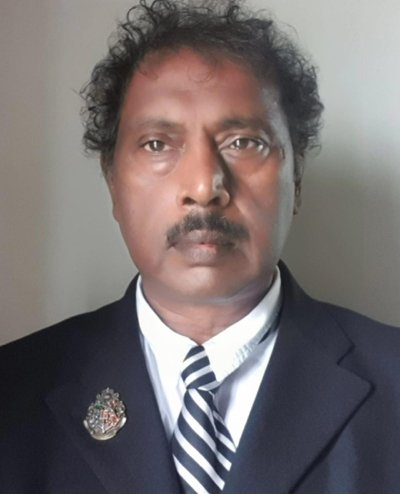
Padma Shri Scientist Dr. Ajai Kumar Sonkar on the hidden cost of a friction-free life
Look at the universe.
The Earth rotates without panic. The Moon follows its orbit without anxiety. Trees grow without checking the clock. Rivers flow without worrying about how quickly they will reach the sea.
Everything is moving, yet nature is not restless.
Human beings are different.
We hurry to work, hurry to eat, hurry to reply, hurry to travel, hurry to shop and increasingly, hurry even to relax. We expect instant messages, instant entertainment, instant food, instant delivery and now, instant answers from artificial intelligence.
The universe is moving, but humans are rushing.
I believe one important reason is that modern civilisation has progressively removed the small frictions that were once naturally built into human life.
When convenience becomes a biological problem
For most of human history, obtaining something required movement, effort and waiting. Food had to be found and prepared. Shopping required travelling. Communication involved delay. Entertainment required participation.
Today, a few touches on a smartphone can bring almost anything to our doorstep.
Quick commerce is a remarkable technological achievement. But it raises another question:
What happens when activities that once required movement become activities that require only a finger?
One delivery does not make a person unhealthy. The concern is cumulative.
Thousands of small conveniences can gradually create a lifestyle in which walking, carrying, climbing and even waiting disappear from everyday life.
The World Health Organization reports that about 31% of adults worldwide were insufficiently physically active in 2022, and identifies physical inactivity as an important risk factor for cardiovascular disease, diabetes and other health problems.
Scientist’s View
“The problem is not convenience itself. The problem begins when convenience systematically replaces biological activity. Technology should save unnecessary effort, not eliminate necessary movement.”
— Dr. Ajai Kumar Sonkar
Physically still, mentally overstimulated
Modern life has produced a remarkable paradox.
We sit while working, travelling, shopping and watching entertainment. At the same time, our minds are continuously exposed to messages, videos, advertisements, notifications and new information.
The body is often still while the mind is constantly running.
The human nervous system is not designed simply for continuous stimulation. We need periods of activity and recovery, engagement and disengagement.
Dopamine, often simplistically called the brain’s “pleasure chemical”, actually plays important roles in motivation, learning and reward prediction. Repeated exposure to novelty and anticipated rewards can make the next stimulus highly attractive.
A notification becomes a cue.
A new video becomes a cue.
A message becomes a cue.
A discount becomes a cue.
We begin to ask constantly:
“What is next?”
and become less comfortable with:
“Nothing is happening right now.”
Research on mobile-technology habits has also found associations between heavier device engagement and reduced delay of gratification, although such findings do not prove that smartphone use itself causes impatience.
We are losing the habit of waiting
There was a time when waiting simply meant waiting.
A person waiting for a train might watch people. A traveller might look through a window. A child might stare at the sky. A person walking might think.
Today, the smartphone can fill almost every empty second.
Waiting in a queue? Scroll.
Waiting for food? Scroll.
Sitting in a car? Scroll.
Before sleeping? Scroll.
After waking? Scroll.
Perhaps every empty moment does not need to be filled.
Boredom is not necessarily a wasted state. Silence can give the mind space to reflect.
Patience, too, is a capacity. If every desire is immediately satisfied, we may give ourselves fewer opportunities to practise waiting.
The body evolved with friction
Our ancestors did not need a separate “exercise session” every day to move.
Walking, carrying, climbing, searching, preparing food and travelling were part of ordinary life.
Modern civilisation has separated physical activity from daily living. We can now spend most of the day sitting and then attempt to compensate with a short workout.
Exercise is valuable, but everyday movement matters too.
WHO recommends adults undertake 150–300 minutes of moderate physical activity per week, together with muscle-strengthening activities.
The question therefore should not always be:
“How can technology eliminate this effort?”
Sometimes it should be:
“Does this effort actually need to be eliminated?”
Use it or lose it applies beyond muscles
We understand that muscles weaken when they are not used.
But human beings have other capacities too.
Attention needs practice.
Memory needs use.
Decision-making requires experience.
Problem-solving requires effort.
Patience requires opportunities to wait.
Technology can support these abilities, but it can also substitute for them.
A calculator assists calculation. GPS assists navigation. Artificial intelligence assists writing and analysis.
The important question is:
What happens when assistance becomes permanent substitution?
Scientist’s View
“A machine should extend human ability, not quietly make the human ability unnecessary.”
— Dr. Ajai Kumar Sonkar
This distinction may become particularly important as artificial intelligence becomes increasingly embedded in everyday life.
We should not reject technology. We should restore balance.
Modern technology has brought enormous benefits. We should not romanticise hardship or return to the past.
The challenge is to distinguish between removing harmful hardship and removing healthy friction.
Walk when walking is practical.
Take the stairs when appropriate.
Carry your own things when possible.
Cook occasionally.
Spend time outdoors.
Eat without a screen.
Keep some periods notification-free.
Allow children to experience boredom.
Give the brain an opportunity to solve a problem before immediately asking a machine.
And sometimes, simply wait.
Not because technology has failed, but because waiting is part of being human.
The universe is moving, but it is not rushing
Technology will continue becoming faster.
Delivery will become faster. Communication will become faster. Artificial intelligence will become faster.
The challenge is not necessarily to slow technology.
It is to prevent human biology from being forced to live permanently at technological speed.
The human body still needs movement.
The mind still needs recovery.
Learning still requires effort.
Healing still requires time.
Relationships still require patience.
Nature has not changed its fundamental rules because we invented smartphones.
Perhaps we have confused speed with progress.
The future should not be a civilisation in which humans do less and machines do everything. It should be one in which machines handle what machines are good at, while humans preserve what makes them human.
The goal should not be a friction-free life.
The goal should be a life with the right friction.
Because perhaps the greatest luxury of the future will not be getting everything instantly.
It will be having the ability to wait peacefully for something worth waiting for.